A Doll's Book
LIVE BROADCAST TRANSCRIPT — THE BETTER STORY, 24 JULY 2026
Segment 1
[INTRO MUSIC — BRIGHT PIANO OVER A STEADY HANDCLAP BEAT]
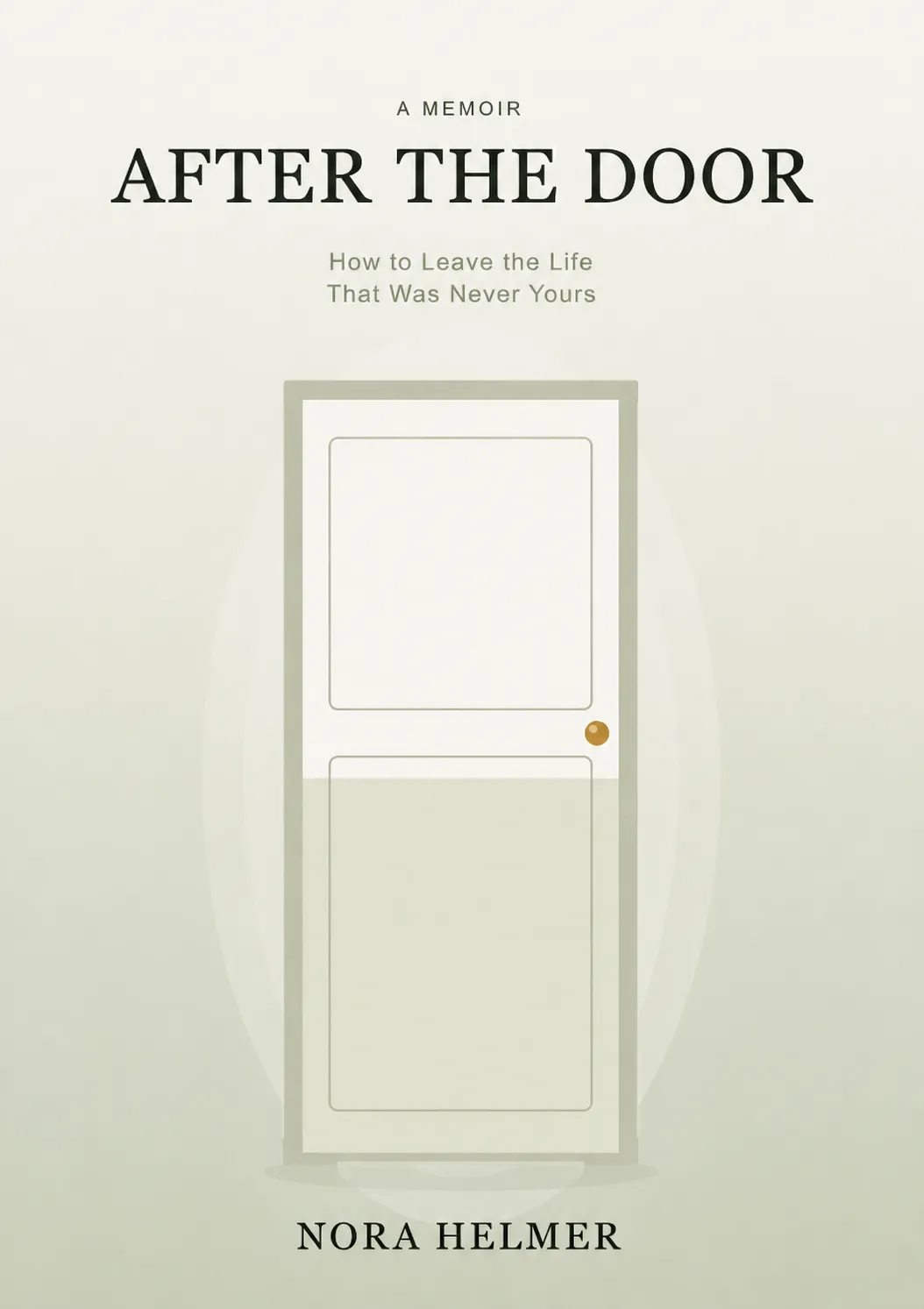
[GRAPHIC: AFTER THE DOOR]
[CHYRON: NORA HELMER — THE WOMAN WHO WALKED OUT]
[VIDEO PACKAGE: NORA AT BOOKSHOPS, SIGNINGS AND RECENT INTERVIEWS; COPIES OF AFTER THE DOOR DISPLAYED IN STORE WINDOWS]
HOST (V.O.)
Six weeks ago, few people outside Nora Helmer’s own family and circle knew her name. Today, her memoir, After the Door: How to Leave the Life That Was Never Yours, is the book readers are passing between friends, sisters and daughters.
Part memoir and part guide to personal liberation, the book asks readers when loyalty becomes self-erasure — and when leaving becomes necessary.
Nora writes about a marriage shaped by secrecy and dependence; the secret loan she obtained using a forged guarantee; and the journey she says saved her husband’s life. She also writes about the night the deception was exposed — and she walked out of the family home.
It was that final moment — the closing door — that readers seized upon. Critics called it a sound women had been waiting to hear.
Her former husband declined our invitation to appear, saying he would not discuss private family matters publicly.
This morning on The Better Story, Nora Helmer joins us to tell that story in her own words.
[VIDEO PACKAGE ENDS. CAMERA RETURNS TO NORA, WITH KRISTINE SEATED BESIDE HER]
HOST
Nora, welcome. You are joined by your old friend, Kristine Linde.
[APPLAUSE]
[CHYRON: NORA HELMER — AUTHOR, AFTER THE DOOR]
NORA
Thank you. It is very strange to hear my life introduced with music.
HOST
You write that for years you had been performing a version of yourself that made everyone else comfortable.
NORA
Yes. A wife who was cheerful, pretty, grateful. A mother who never wanted anything that did not fit inside the home. I had become very accomplished at being loved by people who did not know me.
HOST
What did it feel like, then, to step outside without knowing what came next?
NORA
It was terrifying, really. I had no plan, not even a job or anywhere to live. I took nothing that belonged to my husband. I simply left.
[NORA HANDS THE BOOK TO KRISTINE]
NORA
Hold this for me, would you? Do you remember what I had with me?
KRISTINE
Your coat. A small case. Your passport. Some money.
[CHYRON: KRISTINE LINDE — NORA’S OLD FRIEND]
NORA
Very little money. Barely enough for the cab.
KRISTINE
You came to my room.
HOST
There is something powerful in that. One woman closes a door, and another woman opens one.
[APPLAUSE]
NORA
Kristine has always been the person who understands what must actually be done. When I was still trying to become brave, she was already practical.
KRISTINE
Well, you were certainly brave enough to arrive at quarter past midnight.
HOST
So even that first act of independence contained an act of trust.
NORA
Freedom does not mean that nobody helps you. It means that you are free to choose who does.
[APPLAUSE]
HOST
And those choices — the people we trust, the truths we finally tell — are where we begin today.
[KROGSTAD TAKES THE EMPTY CHAIR BESIDE KRISTINE]
[CHYRON: NILS KROGSTAD — THE MAN WHO USED HER SECRET]
HOST
One of the people in that story is Nils Krogstad. He arranged the loan that made the journey possible and later threatened to expose the forged guarantee Nora had used to secure it. In the book, Nora refers to him only as K.
KROGSTAD
Which protected me from everyone except people who had worked at the bank, knew the family or lived in the same town.
HOST
You have said that you want viewers to understand why you made the original loan. We will come to that. But first, we should be clear about what happened later.
When you discovered the guarantee was forged, you used Nora’s secrecy to pressure her former husband into protecting your position at the bank.
KROGSTAD
I don’t deny that. I would rather it had not come to that.
NORA
I am glad he admits it. In any case, the loan was settled.
KROGSTAD
Yes, I forgave the balance. But I was not told the guarantee was forged when I advanced the money.
NORA
You demanded security.
KROGSTAD
Yes. That is generally when one hopes it is real.
[LAUGHTER]
HOST
Nora, what did you hope your husband would do when he learned the truth?
NORA
I believed he would take it upon himself.
KROGSTAD
The forgery?
NORA
I thought he would say it was his doing. Then I would know he loved me.
KROGSTAD
But it was not. Was he told there was a test?
[CROSSTALK]
HOST
Nora has never denied the forgery. She describes it as an illegal act committed in desperate circumstances.
KROGSTAD
She describes the desperate circumstances very fully.
HOST
You dispute them?
KROGSTAD
I dispute where my part now begins. I did not enter the story standing over her with a letter. She came to me for the money.
NORA
Because my husband was dangerously ill.
KROGSTAD
That is what you told me, yes. That without the journey he might die. I took that into account.
NORA
It was true.
HOST
So concern influenced your decision, Nils. But you later threatened to expose her.
KROGSTAD
I am not proud of that. I was trying to keep my position, and I used what I had.
[PAUSE]
HOST
Nora, what had the doctors told you?
NORA
That my husband needed to leave the country. That he could not go on as he was. They spoke to me because he could not have borne the truth about his condition.
KROGSTAD
Was he ever told what would happen if he stayed in this country?
NORA
He knew he was ill.
KROGSTAD
That was not quite my question.
HOST (interrupting)
But the decision Nora had to make depended on what she understood the danger to be.
KROGSTAD
It also mattered to the man deciding whether to lend her the money.
HOST
We will return to the medical question after the break. But first, there is another remarkable turn in this story. Nils and Kristine, the two of you found your way back to each other.
KRISTINE
We decided to make a household.
HOST
Together.
KROGSTAD
Generally, yes. I keep the house. She goes to the office.
[LAUGHTER, THEN WARM APPLAUSE]
HOST
That is a very modern partnership.
KRISTINE
It works for us, that’s all.
HOST
Nora, do you see their household as part of the change your decision set in motion?
NORA
I think when one person refuses an old arrangement, it gives others permission to imagine something different.
KRISTINE
We had imagined that before you left.
[PAUSE]
HOST
After the break, Dr Rank joins us live from hospital to discuss the illness of Nora’s former husband — and the extraordinary journey that saved his life.
[CHYRON: THE JOURNEY THAT SAVED HER HUSBAND]
[SPONSOR BUMPER: VELA SLEEP™ — “REST IS A DECISION.”]
Segment 2
[RETURN MUSIC — THE HANDCLAP BEAT RESOLVES INTO A SOFTER PIANO THEME]
[GRAPHIC: THE JOURNEY THAT SAVED HER FORMER HUSBAND]
HOST
Welcome back. Before the break, we heard that Nora Helmer obtained a secret loan to finance the journey she believed would save her husband’s life.
Joining us now from Oslo University Hospital is Dr Rank, a physician and a close friend of the Helmer household. Dr Rank is currently receiving treatment for a life-threatening condition.
[VIDEO LINK: DR RANK, PRIVATE HOSPITAL ROOM. A COPY OF THE LAST VISITING HOUR — WHAT DYING CLARIFIES ABOUT THE LIVING IS VISIBLE BESIDE HIM]
[CHYRON: DR RANK — PHYSICIAN AND FRIEND OF THE HELMER FAMILY]
HOST
Dr Rank, thank you for speaking with us under these difficult circumstances.
RANK (via video link)
It is kind of you to bring the conversation here. The hospital had exhausted its entertainment budget.
HOST
Your own book, The Last Visiting Hour, is published next month.
RANK
I may not be around by then, so I may as well do the promotion now.
[LAUGHTER]
[CHYRON: DR RANK — AUTHOR, THE LAST VISITING HOUR]
HOST
You were a close friend of the Helmer household, and as an M.D. you are well placed to help us understand the medical crisis behind the journey.
RANK
Well, I was not his treating physician at the time.
HOST
According to Nora’s account, those doctors told her that her husband’s health was in grave danger and that he needed to go south. Was she right to understand the choice as the journey or his life?
RANK
It is an unusually elegant prescription. Several unnamed doctors privately inform the wife that the husband may die, and—
NORA (interrupting)
They knew he could not bear to hear how ill he was.
RANK
Yes. The Helmer marriage appears to have been founded on protecting adults from facts they might find upsetting.
Anyway. The treatment then proves to be not merely rest, but Italy, and not merely Italy, but a year.
[PAUSE]
HOST
But overwork can have very serious consequences.
RANK
Certainly. Exhaustion is real. Though one generally asks what the patient was exhausting himself to maintain.
NORA
He chose to work as he did.
KRISTINE
People usually work that hard for something, Nora.
HOST
If he was that exhausted, then the journey may indeed have saved him.
RANK
Either a year in Italy — or death? I would hesitate to make exhaustion quite so particular.
NORA
You were not there. You do not know what they told me.
RANK
That is true. There is what a doctor says, what a wife hears, what she tells a lender and what eventually survives into print.
[PAUSE]
And television.
HOST
Nora, whatever the doctors’ precise words, you still believe the journey saved him?
NORA
He was ill. I found the money. We went away. He recovered. Yes.
RANK
It is a satisfying sequence. Wealthy patients have always been highly responsive to geography.
[LAUGHTER, THEN CROSSTALK]
HOST
Dr Rank, you were not his doctor at the time. But you have since been described as the family physician.
RANK
Family friend.
HOST
But you visited the Helmer home almost daily.
RANK
I was not visiting him.
[PAUSE]
HOST
Your book is about the honesty that can come near the end of life.
RANK
Honesty, I find, becomes easier as one’s calendar clears.
[HOST TOUCHES HER EARPIECE]
HOST
Dr Rank, thank you for giving us your time while you are receiving care.
RANK
It was my pleasure.
[VIDEO LINK ENDS]
HOST
Naturally, no one here can now reconstruct every word of advice given during a frightening period. What remains is that Nora acted, at considerable personal risk, to protect someone she loved.
Sometimes love acts before certainty is available.
KROGSTAD
Certainty was abundant when she asked for the money.
[PAUSE]
HOST
Nora’s departure required more than courage. It also required someone to care for the family she left behind. Anne-Marie remained with the Helmer children after Nora left.
Anne-Marie, welcome.
[ANNE-MARIE JOINS THEM]
[APPLAUSE]
[CHYRON: ANNE-MARIE — NORA’S FORMER NURSE AND FAMILY CAREGIVER]
ANNE-MARIE
Thank you.
HOST
You had cared for Nora when she was a child, and later helped to raise her children.
ANNE-MARIE
Yes.
HOST
Nora, when you walked out that night, did you know the children would be safe?
NORA
I knew they were safe with Anne-Marie.
ANNE-MARIE
Yes. You had known me all your life.
NORA
I am so grateful to you. You were as a mother to me — and then to them.
ANNE-MARIE
You’re welcome.
[PAUSE]
HOST
What do you remember about the first morning after Nora left?
ANNE-MARIE
The youngest came into her room at dawn. I got her dressed. The other two were asking for breakfast.
HOST
Did they ask where she was?
ANNE-MARIE
Yes.
HOST
What did you tell them?
ANNE-MARIE
That their mother had gone away.
HOST
And then you carried on.
ANNE-MARIE
They still needed breakfast.
[CHYRON: ANNE-MARIE — THE WOMAN WHO STAYED]
HOST
Nora, one of the most difficult passages in your book is where you say you had to leave them because you did not yet know how to educate them.
NORA
I did not know who I was. How could I teach them to become themselves? I believed I would harm them if I stayed and continued pretending.
HOST
So leaving was also, in your understanding, an act of protection.
NORA
Yes. Not the easy kind. I lost the ordinary days with them. Their voices in the morning. Knowing what they had eaten, whether they were ill, what made them laugh.
I paid for that decision every day.
[PAUSE]
HOST
Anne-Marie, did you ever resent what was asked of you?
ANNE-MARIE
No one asked me.
HOST
You simply knew what had to be done.
ANNE-MARIE
The children were there.
[HOST TOUCHES HER EARPIECE]
HOST
And perhaps that is where the story becomes larger than one woman’s departure. Freedom may begin with a door closing, but it depends on the people who keep life going on the other side.
[CHYRON: WHO MAKES FREEDOM POSSIBLE?]
HOST
Nora, does that change how you understand your story?
NORA
It does not change why I left.
HOST
Of course not. But perhaps courage is not only the courage to speak. Perhaps it is also the courage to listen.
[PAUSE]
NORA
Yes. Telling your truth may only be the first stage.
KRISTINE
You have reached the second very quickly.
HOST
Sometimes a conversation creates that opportunity.
KROGSTAD
It may even create a sequel.
[LAUGHTER]
HOST
Actually, there may be another book in that. After the Door was about finding your voice. This conversation feels like the beginning of something else.
[CHYRON: NORA HELMER — THE COURAGE TO LEAVE AND TO LISTEN]
NORA (looks at monitor)
That is better. It sounds kinder than the first one.
[LAUGHTER]
HOST
Would you consider writing it?
NORA
I thought the door was the ending. Perhaps it was only the beginning.
KROGSTAD
Will I still be K?
HOST
After the Door is available now. Our thanks to Nora Helmer, Kristine Linde, Nils Krogstad and Anne-Marie — and to Dr Rank, who joined us from Oslo University Hospital.
Coming up: could your bedside table be preventing emotional closure? We ask the experts.
[APPLAUSE]
[TRANSITION MUSIC]
This satire was inspired in part by Kirsti Boger and Inge S. Kristiansen’s Nora, du lyver! En studie i Henrik Ibsens "Et dukkehjem" (1994), whose dissenting reading of Nora informs several of the factual and moral challenges dramatised here.