Notes from the Online Underground
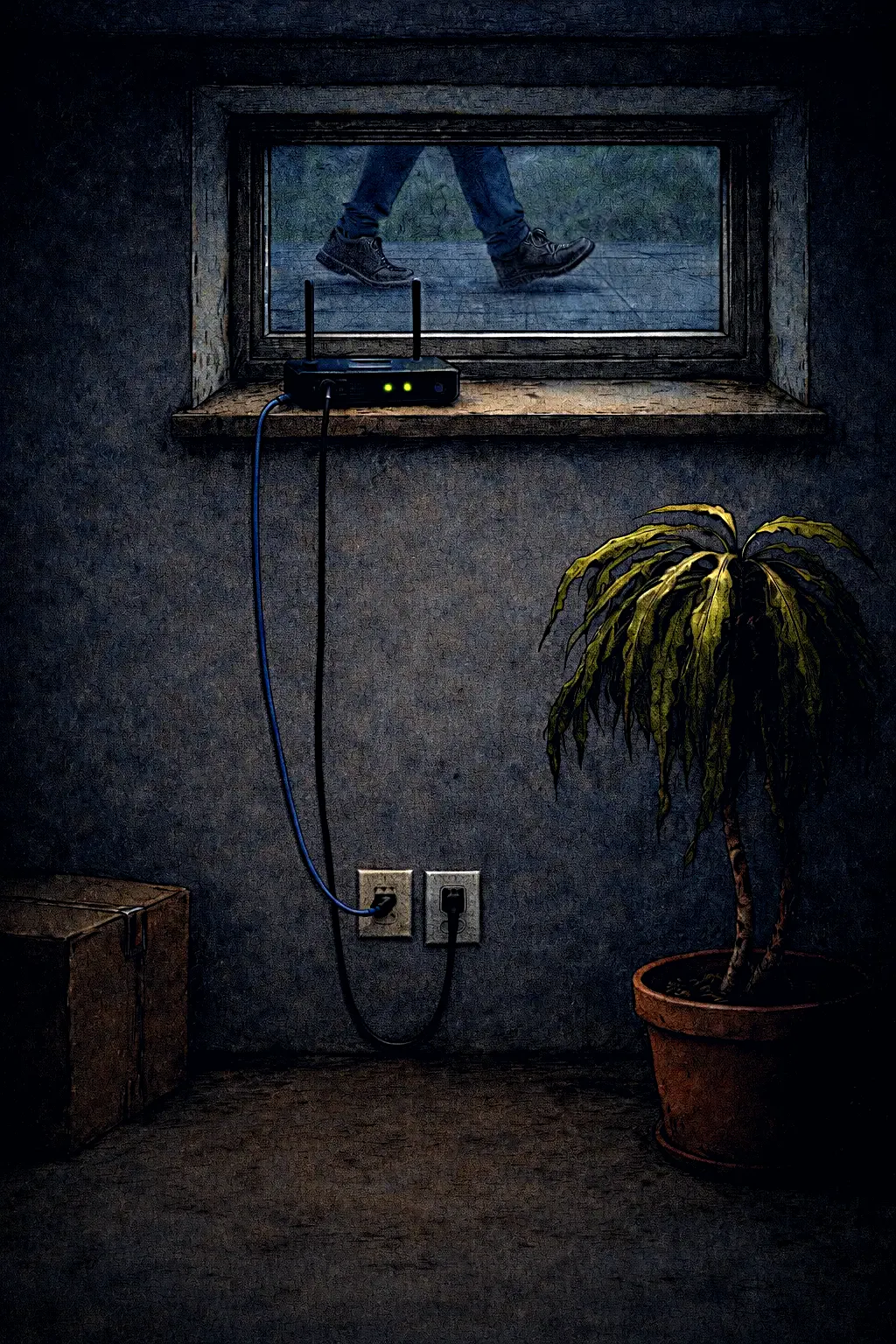
Part 1: Online Underground
I am a sick man. I am a spiteful man. I am an online man.
I am forty. I live off a crypto windfall I still call skill, out of wounded pride.
I’ve learnt the arithmetic of my own interests. I know the politics I agitate for won’t make my life easier. They’ll take more from me in the end. I know it. That is not a secret; it is the point.
The compassionate offer empathy and a tax on my little miracle, to fund migrants who, I’m certain, would despise me the moment they saw my hideout. And I cling to that certainty because it asks nothing of me. My side offers punishment, and the pleasure, yes pleasure, of watching the correct people finally lose their composure.
I don’t own much. But I own the libs. That is my small property (a ready-made phrase, like a sticker), and I guard it like a miser; not because it makes me rich, but because it makes me, for a moment, unhumiliated.
I envy direct people. They’re stupid, perhaps; but they function. They buy things without composing an essay about buying things. They vote as though a vote were simply a vote: not a confession, not a weapon, not a biography.
I can’t. I catch myself in the act of catching myself. I watch my own thoughts the way a petty official watches a queue: suspicious of every movement. Nothing gets through without being inspected, corrected, ironised, filed as evidence against me. Even my impulses arrive with footnotes.
So I live by commentary. I don’t act; I post about action. And I call it intelligence because calling it illness would require what I lack: directness.
There is a wall now, too. They will tell you it isn’t a wall, but reality: the science, the models, the consensus. Two plus two equals four, rendered in pastel charts and solemn headlines. And you are expected not only to accept it, but to accept it with the correct expression.
That is the demand: not agreement, but the face that goes with it. The little smile of reasonableness. The sigh of compassion. The ritual outrage at the approved villain. The tone that says you belong in the warm room. It isn’t the facts that enrage me. It is the chorus. The way every institution speaks in one voice, as though they had rehearsed it, as though dissent were not an error but a stain.
Say the right sentences and you are clean. Hesitate, laugh at the wrong moment, ask a question in the wrong key, and you are not merely mistaken but dirty.
I cling to that dirt because it proves I exist.
Then comes the gentle censorship, the soft hand over the mouth. Not a prison, just a pop-up. A warning. A label. A deletion “for your safety.” A ban “to protect the community.” Reconciliation is offered on the same terms every time: confess, apologise, adopt the correct expression, and you may re-enter. But if I reconcile, I surrender. I lose the only thing that still feels like mine.
My refusal.
I will tell you what my freedom is. Not comfort. Not happiness. Not even the sensible pursuit of my own advantage. No. Freedom, for me, is caprice: the right to choose what will hurt me, and to choose it knowingly.
That is why “owning the libs” delights me, I suppose. Not because it feeds me, or saves me, or makes me respectable, but because it gives me a counter-expression. It lets me do harm in public and call it honesty. It lets me parade my bruises as credentials and watch them flinch. It lets me vote for my own inconvenience as though it were a principle.
It is a small, mean liberty. Yes, childish! What of it? It is mine.
And the wall, conveniently, provides its symbols. There are always outgroups below and elites above; always someone for me to blame for the charts, the taxes, the sermons. And always a cheap thrill in blaming them. If I can’t crack the wall, I can scratch my name into it.
And if I can’t be free, at least I can, for a moment, be ungovernable.
You are already judging me. I can see the quote-tweet forming, the moral thread, the tidy diagnosis. I know which sentence you’ll screenshot. Save it. I have subtweeted myself more viciously than you ever could. I have read your objections in advance and corrected your tone. I out-argue you because I am arguing with you inside my head.
And don’t imagine I’m asking to be rescued. I chose this.
That is what I post.
The truth is simpler. I’m not underground because I’m proud. I’m underground because I can’t climb. I call it “the globalised economy” so my shame can wear a suit.
I am bored. That is the beginning of everything here, and my excuse. Boredom breeds confession the way damp breeds mould.
I have no readers: at most lurkers, drive-by sneers, the occasional person who blocks me with a flourish, performing hygiene. Still I write as if my little corner had an audience. Perhaps it does. Perhaps I have simply internalised the feed.
In any case, I am not going to tell you a story. Don’t hope for it. I don’t believe in stories. I will give you notes — incidents — scenes I keep reopening like old tabs, not because they are important, but because they still sting.
Part II: Apropos of The Screen Glow
In the pre-match lobby of Call of Duty we milled around like livestock in a pen.
I was standing there in my ignorance, blocking the way, as if anyone in that pen has a “way,” and he wanted to pass; he slid through, shoulder-first, and without a word, without a pause, without even a glance, pushed my avatar aside and went on as though he had not noticed me. I could have forgiven abuse in voice chat; I could have forgiven a real insult. But I could not forgive being moved without being noticed.
Devil knows what I would have given for a proper quarrel, a decent one, a more, so to speak, literary one. I had been treated like a default skin. He was announced by the lobby itself: ranked emblem, rare operator, that breathing calling card — and a dark, perfect face from the featured page. Approved, premium, untouchable. The kind that makes you feel, irrationally, that you are already in the wrong.
And I was nobody. I had only to make a scene in the voice chat. Yet I did nothing.
Don’t imagine it was fear. I have never been a coward at heart, though I have always been a coward in action. It was vanity. I was afraid of being ridiculous, of protesting and having it swallowed by the warm-up noise, by their indifference. To be ignored is the only injury that has no reply. From that moment it all became geometrical. Dignity measured in inches. He had passed on a line, he had displaced me on a line, and it stood. Very well. Let it stand again, differently.
I began to calculate. I began to rehearse. I stood in lobbies I did not even mean to play, watching the little routes between crates and doors, stepping into them, adjusting myself by a half-step, as though I were preparing not for a match but for a duel. I corrected my timing, my angle, my approach, with the seriousness of a man arranging his conscience.
It was not revenge I wanted. If he had noticed me and laughed, I could have hated him like a person. I wanted something cleaner. I wanted equality. One clean, literal shoulder-check back. A collision as proof that I, too, occupied space.
And don’t tell me this is childish. I know it is childish. That is why it is so shameful, and why it has such power over me. I could endure being poor. I could endure being wrong. I could not endure being air.
Especially not to him.
So I did what a reasonable man does when his dignity has been nudged aside in a video game. I went to the store.
I hovered over an operator from the new catalogue, dark-skinned and serious. Under the new rules imposed from above, this was what status looked like. The right face, and you get to take up space. I could either sneer in my default skin, or pay the tribute and pretend it was choice.
With the bitterness of a man paying tribute to the age, I clicked purchase.
I told myself it was strategy.
Afterwards I sat there, newly dressed, and felt disgust rise in me, not at them, but at myself. I had bought permission to think my shove would count.
For days and weeks I looked for him in the lobbies. Finally I was done with it. One last lobby, I thought, just to prove I could leave.
Then he appeared again, and my body decided before my mind could editorialise. I stepped into his line, corrected my angle by a hair, and waited for the exact contact.
We hit. Shoulder to shoulder.
I held. I went on. For a second we were equal, not in whatever rank and glow he wore, but in social standing. I had weight. I took up space. I was not moved.
He didn’t react. He didn’t turn. His avatar went slack in that idle way, as if his hands had left him for the menu. I told myself he felt it anyway. I told myself he noticed and refused to give me the satisfaction. The lie arrived on its own, quick as a reflex. But the warmth in my chest was real. Giddy, almost laughing, I opened my loadout and stared at my newly dressed operator as if I’d purchased a spine.
I haven’t seen him since. Different hours, different servers. He goes on sliding through other bodies. Who does he move now, without noticing?
Friends. When I say “friends,” do not imagine friendship. Imagine an old cohort from IT school, back when we were still shut in fluorescent rooms with sour coffee and the shared belief that we were the future. They have kept in touch the way people do now: efficiently, occasionally, with likes.
I had not been invited to anything for a long time. Then I saw Simonov’s neat little announcement, a Zoom “farewell” for Zverkov, who had been promoted, it seemed, into the stratosphere. Venture capital at Google, or Google at venture capital; I lose track of their heavens. The point was that he had become one of those men for whom success is a tone of voice.
So I DM’d Simonov on LinkedIn. Less a message than a manoeuvre, half-joke and half-plea. I congratulated him on organising it, hinted that of course I would be there, and asked for the link as if it were an administrative detail and not a favour. I despised myself while I typed and polished the sentence all the same. In the end he sent the link, politely, without warmth. That was enough.
I told myself it was enough.
We had agreed on a time: 5 PM. I joined at that time, with the punctuality of a man who has nothing else left to do with his dignity. And I was met by whiteness: a pale, empty screen and one polite sentence, centered like a verdict:
Waiting for the host to start this meeting.
At six the screen finally changed. Simonov’s face appeared, too close to the camera, enlarged and indifferent, and he began hosting as if nothing had happened. The others came in one by one, smiling already, framed by bookshelves and tasteful walls, as if they had arranged their lives for this rectangle.
Then Zverkov’s tile lit up. Better camera. Better light. A steadier voice. Simonov congratulated him with that polished warmth that admires itself while it flatters. I sat there trying to look as though I had not been staring at a white sentence for an hour. They took turns congratulating him, each voice polished and brief, and little icons of approval floated up. I clicked one at the right moment.
Someone said, lightly, as if mentioning the weather, “Sorry we pushed it an hour.” Simonov nodded along, smiling, as though postponement were a natural law and my time merely an optional setting. I felt my face grow hot, but I smiled too, because indignation, in a Zoom rectangle, looks like poor lighting.
They raised glasses in their rooms, mugs, tumblers, something artisanal. I could have stayed quiet. I could have clicked another reaction and let their warmth wash over me like disinfectant.
Instead I unmuted.
“I’ll drink to Zverkov,” I said, and heard at once the wrongness of my voice among their tidy voices. “To your promotion, to your... trajectory. To being always on the right side of history.” I laughed, as if it were praise. “You’ve done it beautifully. Empathy in the bio, moderation everywhere, and somehow profit all the same. A good person, in other words. The kind the algorithm can trust.”
A pause. Small, complete. Smiles stayed where they were. Eyes flicked. Someone made an approving sound that meant nothing. Zverkov thanked me with perfect calm, as if I had handed him a napkin.
I told myself their politeness was contempt. I told myself they were offended because I had touched sacred things with my own dirty hands. I told myself I’d struck a blow. And in the telling, at least, I did.
Simonov cleared his throat and smiled in that managerial way of his. “Right,” he said, “let’s hop into a breakout for a bit. We’ll keep it small — old core group. Just to catch up properly.”
There was a soft chorus of agreement, nods, polite laughter. I waited for the prompt to join them. Nothing came. And then they were gone.
I remained.
The main room held only my face and my name. Somewhere behind the interface they were together, warm, talking freely at last. I could have left. I could have clicked the button and spared myself. I did not.
On spite.
I sat there as if sitting were an argument. Once or twice I unmuted and let a chair-leg scrape, then muted again. Not to speak, God forbid, but to exist audibly, to prove I could leave a mark even in their clean disappearance. The minutes crawled. I was holding my ground, refusing reconciliation. Let them enjoy their liberal consensus, their hygiene of empathy, their “do better.” Let them congratulate themselves on excluding the unpleasant man. I would not give them the satisfaction of my vanishing.
This is what I have instead of power: refusal. This is what I have instead of love: spite.
And in that spite I salvaged a victory. I don’t own much. But in my own way, I own the libs.
At last Simonov ended the meeting. The screen went white again, polite and final. They never returned. They never had to.
I sat for a moment in that whiteness, as if it were still an audience, and felt the shame settle in me like grit.
There are several ways to wash shame off. The best, if you are a modern man with principles, is to call it self-care.
So I opened another tab.
The page loaded already decided: one bright room pinned at the top, insisting on itself. I clicked without choosing. She appeared. Not the prettiest, but solid, well made. A pale face, straight dark brows, eyes too grave for the work. She did not smile; that saved her. She looked faintly skeptical, faintly glum.
We spoke the necessary words. The rest I will not describe. It is enough to say that I had paid for more time than I could bear, and when the necessary part was over there were still minutes left, ticking away in silence.
The minutes would not hurry. Her face stayed on the screen, watchful and remote, waiting for the next instruction.
“What’s your name?” I asked, sharply, to end the looking.
“Liza,” she said. The word came out flat, almost unwilling.
I searched for something to say, found only weather.
“Filthy day,” I muttered. “Wet snow.”
“It makes no difference,” she answered, and her indifference irritated me, as though she were withholding some courtesy I had paid for.
Silence again. I felt my thoughts begin to crowd. I began speaking just to stop hearing the timer.
“You know what they do to you,” I said, and I enjoyed the weight of they at once. “They sell you ‘choice’ and ‘empowerment’ and keep the money clean. They turn a girl’s vulnerability into a service and call it progress.” Her eyes shifted, a flicker of attention, or fatigue. I took it for attention and went on.
“They’ve taken the ordinary life and made it unfashionable. A door you can close. A table that belongs to you. A kettle. A name spoken without bargaining. Even shame had its place once; now it’s content.”
I could hear myself growing warm, bookish, certain. The images came easily, as if I had lived them.
“You could still have it,” I said, lower. “You’re young. You could go home. You could marry. You could wake up and have the day ahead of you without having to perform for it. Someone could look at you without browsing.” And in the last minutes, when I felt the power of my own words landing, I hurried to the hook.
“Don’t message here,” I said, pasting a link in the chat. “If you ever want to talk properly, call me on Zoom.”
In the morning I was disgusted with myself. Those words, those pictures, that sudden tenderness. A fit. I washed it off with contempt and went on with my day as I always do: by pretending there had been no yesterday.
By evening I had almost succeeded in forgetting her. I had certainly succeeded in forgetting the link.
I was halfway through doing nothing when the desktop chimed and a name rose up on the screen like a mistake.
Liza.
Zoom. Incoming.
For a second I stared at it in honest bewilderment, as though the world had no right to remember. Then my hand clicked accept.
The camera opened at once. I could not tilt it away; it sat there like an eye nailed to the wall. My face appeared, too close and too pale, and behind it my room, sharp and merciless. Zoom had reset my settings. No blur, no polite fog. The peeling faux-leather couch with the foam showing. The laundry slumped on a chair. The pilled robe tugged shut at my throat, as if cloth could hide a life.
Her camera came on. She looked once, quietly. I felt the room climb into my face.
“Do you want me to order you something?” I blurted. “Foodora. Anything.” The words sounded like a bad skit. I felt a hot rage at the smallness of my own props.
“So,” I said, and felt my voice sharpen with relief. “Here you are. You’ve come for more fine sentiments. For the little speech. For the warm pictures. You want me to go on talking like a book until you can feel clean again.” I stood up, sat down, stood up again; the camera watched. “I’ll tell you why I did it. I had been humiliated and I needed somewhere to put it. I came there to wring something out of you, tears, shame, anything, so I could feel myself above someone for five minutes. I talked about homes and husbands and children because words are the only thing I can make obey me. I don’t live; I compose. I don’t love; I practise rescue. And you’ve done the one thing you weren’t meant to do.” I flung a hand at the room. “You’ve made it real. You’ve turned my speech into a visit. You’ve made me sit here, unblurred, in my own life. I don’t want you to look. I don’t want anyone to look. I want peace. I want to be left alone. I want my little underground back. Do you understand? Or do you only understand speeches.”
She didn’t argue. She didn’t moralise. She only sat there, grave and quiet, as if she had come not to be entertained but to see whether I was real.
“I’m sorry,” she said at last, almost under her breath. “You’re very unhappy.”
I could not bear the quiet of her face. I needed to change the meaning of what had happened before it settled into something tender.
“Wait,” I said, and fumbled, eyes darting off-screen. My fingers moved with ugly speed. A code, a link, a little rectangle of value — clean, transferable, safe. I pasted it into the chat.
For your time.
There. Transaction restored. The warm room boarded up.
She looked at the message for a moment. Then, without a word, she copied the code and pasted it back beneath mine, as if laying it on the table between us. Beneath it she wrote only:
Cancel it.
And she was gone. The call ended. The chat remained, with my money sitting there, returned, like an accusation that did not need speech.
Even now this festers in me like an evil memory. I ought to stop here. A story needs a hero; I have built an anti-hero out of spite and posted him.
We don’t like life. It asks things. It asks you to get up and wash and speak to people who can see you. The feed asks nothing. Only that you feel something. Preferably aggrieved. Ideally, brave. Give us a little more freedom and we would beg for the wall again at once. Beg for moderation, for bans, for “the science,” for the approved phrases. So long as we can pretend we are the brave ones resisting it.
I need the enemy clean. Give me a complicated enemy and I’d have to think, and thinking is hard work unless it ends in a post. So yes, libs will do. NGOs will do. Migrants will do. Anything that lets me feel cornered while I sit down.
I call it “owning” because losing is unbearable.
And if I cannot win, I will at least harm myself loudly and name it truth.
I’ll stop writing now.
The notes of this online cellar-dweller do not end here; they have, in fact, been ongoing for years on the usual forums. But we have had our fill.